SASHA’s five key moments of 2025 (and one for 2026)
2025 has been a huge year for the SASHA Coalition. As the year draws to a close, our Membership & Advocacy Officer Sabrina highlights five key moments including membership growth, technology spotlights and a sneak peek into 2026.
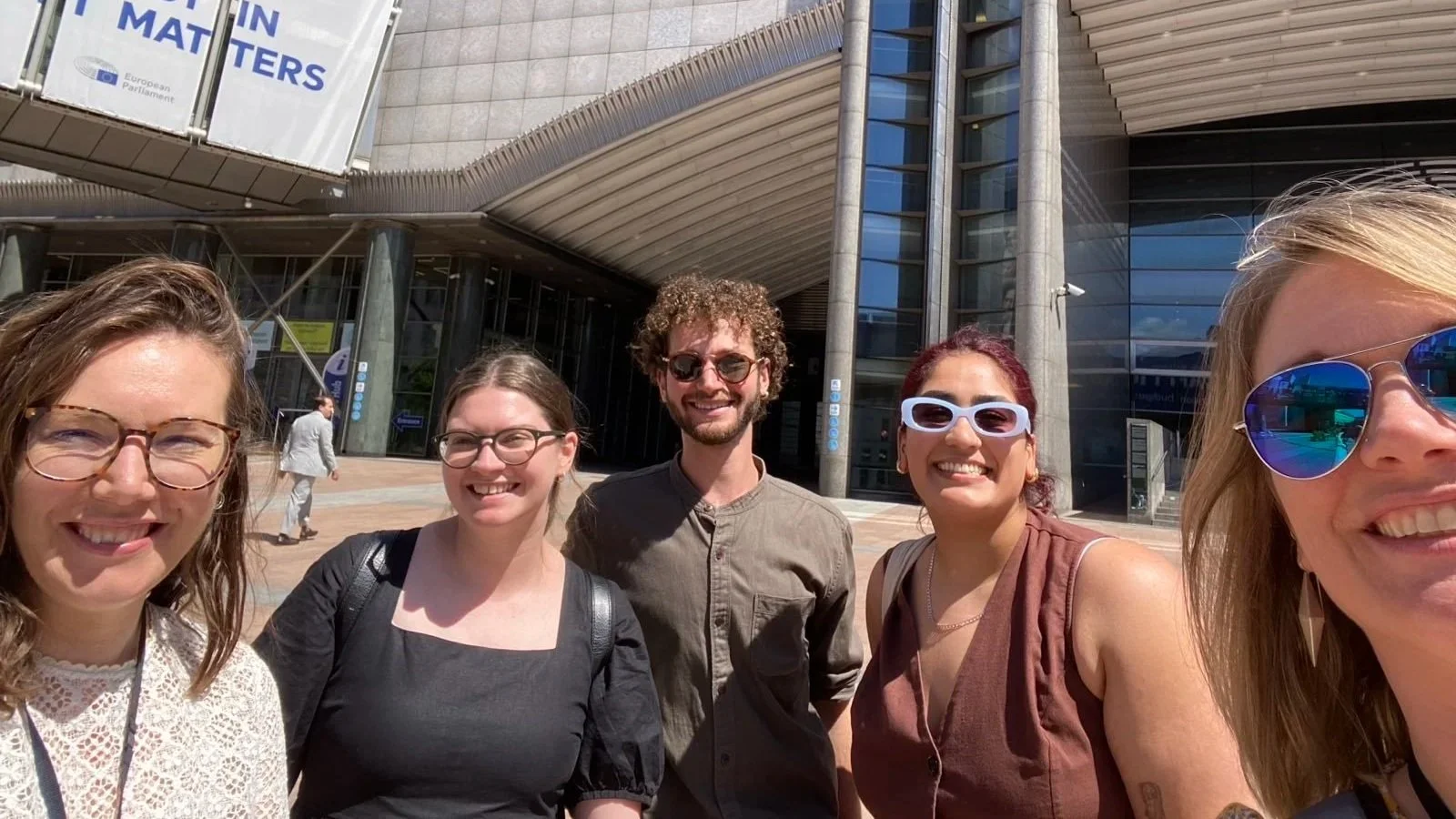
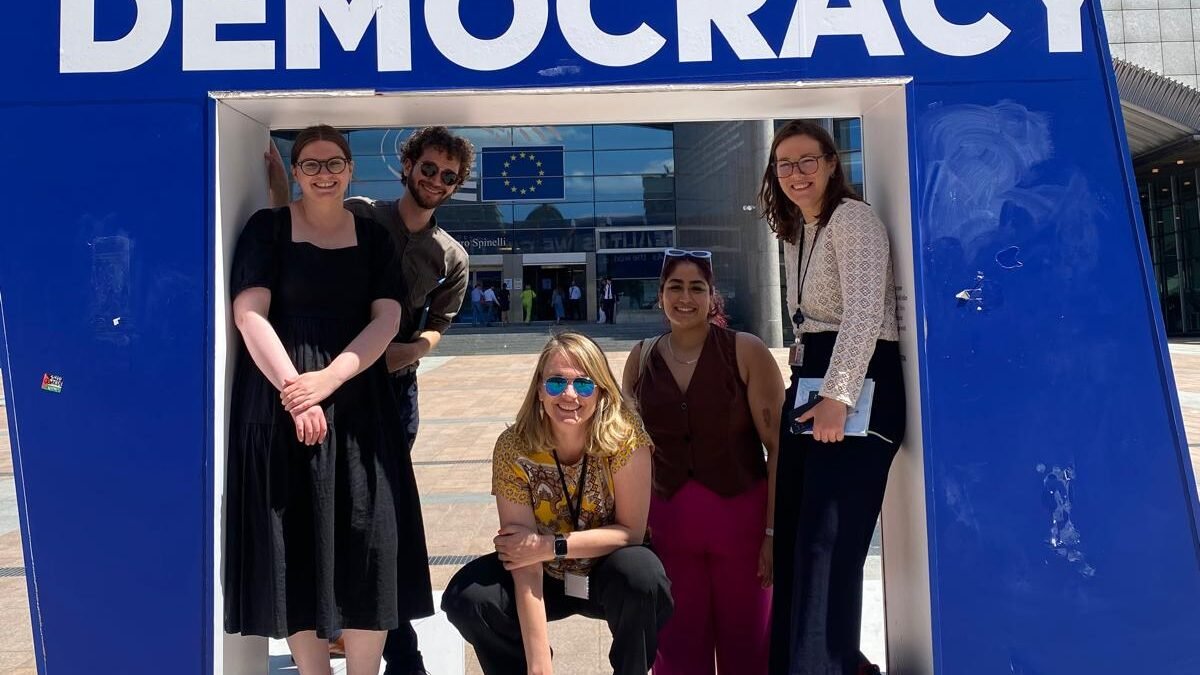
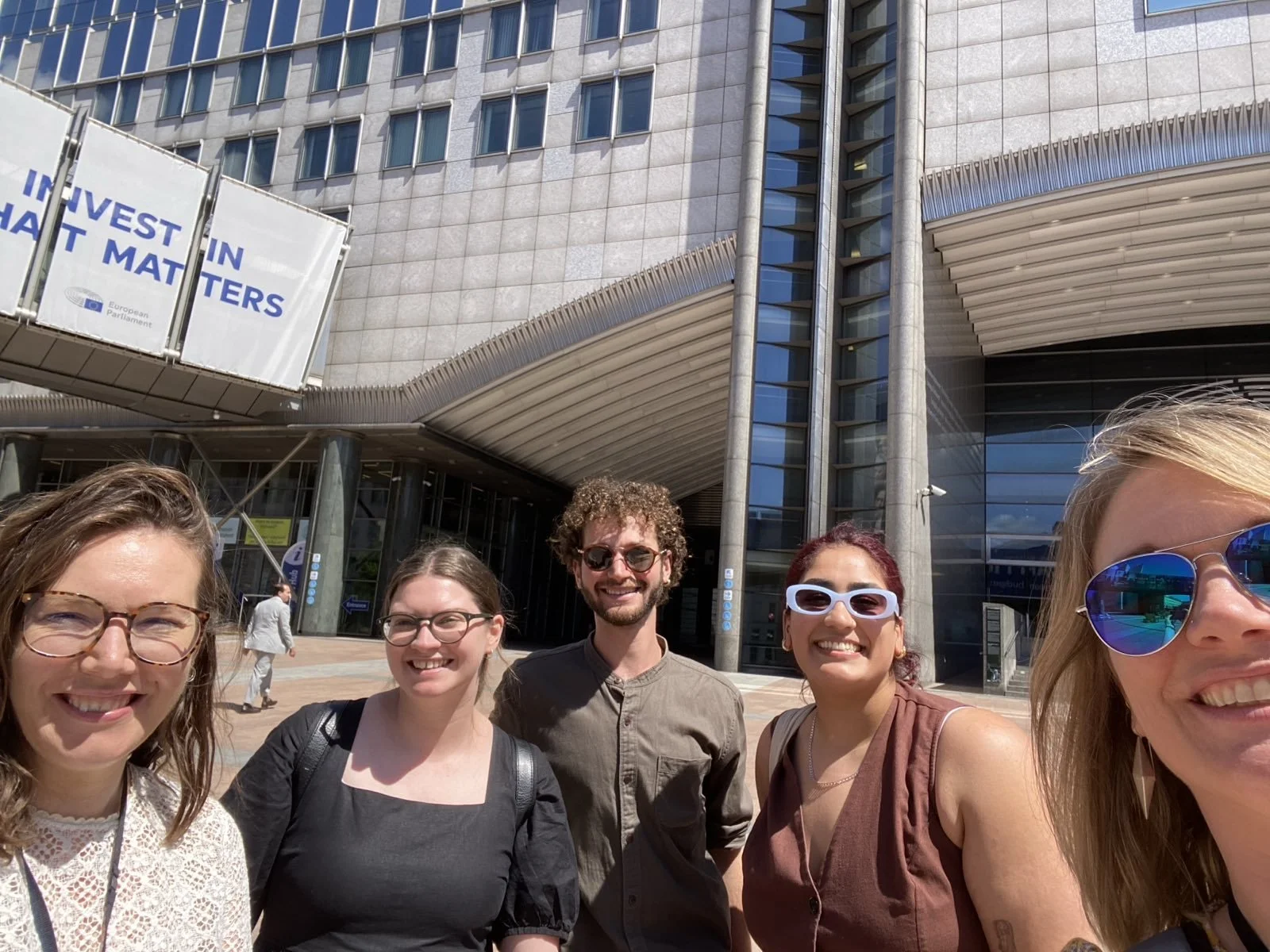
The SASHA Coalition team at the European Parliament. From left to right: Aoife O’Leary (Director and Founder), Nuala Doyle (Advocacy Manager), Daniel Lubin (Communications Officer), Sabrina Khan-Dighe (Membership & Advocacy Officer), Aurelia Leeuw (Director of EU Policy).
1) SASHA grew!
This year saw the team grow by two: Aurelia joined as our Director of EU Policy and Delphine as our EU Advocacy Manager. With this growing team, I pivoted to a membership focused role.
With more capacity to expand our membership, SASHA doubled in size, with crucial new voices from shipping, e-fuels and direct air capture bringing our membership to 18. Our membership spans across the sustainable shipping and aviation ecosystems and the strength of our voice in advocating for holistic policies to develop and deploy the most sustainable solutions only increases as our membership does.

Delphine and Aurelia at Rotterdam Central Station.
2) Europe adopts the Clean Industrial Deal
Following the European elections in summer 2024, the EU released its Clean Industrial Deal in February 2025. With high energy costs and fierce global competition, the EU committed to support European industries develop their competitiveness and decarbonisation. The Deal focuses on energy-intensive industries and the clean-tech sector.
But not all industries have the same voice. It’s never been more important for smaller, green innovators to unite to ensure legacy industry does not dial back climate policy, and the SASHA Coalition provides a unique vehicle for doing so.
That’s why our position paper outlined the following policy recommendations:
Guarantee the future of ReFuelEU Aviation and FuelEU Maritime by strengthening e-fuel sub-mandates and making FuelEU Maritime targets legally binding.
Create a market for zero emission flight (ZEF) by introducing a legally binding mandate.
Expand the scope of the EU emissions trading system (ETS) to include international (not just intra-bloc) aviation, non-CO2 emissions and ships from 400 gross tonnage.
Ensure the Sustainable Transport Investment Plan (STIP) provides ambitious e-fuel support mechanisms, namely a contract for difference scheme to support production.
Since then, the STIP has been released. As a roadmap for accelerating the energy transition for aviation and waterborne transport, the STIP outlines plans for channelling investment to scale up alternative fuels, expected to mobilise at least €2.9bn until the end of 2027.
While the STIP includes important mechanisms to drive investment, they are not targeted to the most sustainable aviation and maritime energy solutions, namely e-fuels produced with renewable hydrogen.
Our assessment is clear: the Commission must urgently ensure that mechanisms announced in the STIP ensure at least a large part of the financial support is earmarked to e-fuels, which require the most support and offer the most sustainable outcome. This is especially crucial considering climate inaction at global regulatory authorities, the International Civil Aviation Organization and, most dramatically, the International Maritime Organization.

Sabrina at the Aviation Carbon annual event.
3) The International Maritime Organization delays
The International Maritime Organization (IMO) made history in April as Member States agreed the Net-Zero Framework (NZF): a basket of measures for driving a just and equitable transition for the global maritime sector. But in October delegates opted to delay the vote on adopting the regulatory package by a year.
This is a problem for the maritime transition, as investors have not received the certainty they need to invest in sustainable fuels that the NZF would have provided. Given the urgent need to reduce shipping emissions at pace, this is a moment to mobilise and not wait for the IMO.
In its Maritime Decarbonisation Strategy, the UK government states that it will “develop bespoke domestic measures to address [the UK’s] share of...international emissions” should the IMO measures be delayed. This is a crucial sentiment that other countries should follow. We look forward to collaborating with the UK government on the planned domestic maritime regulation to ensure the crucial role of the most sustainable alternative energy technologies including e-fuels is outlined.
4) Zero emission technology takes the spotlight
While policy and industry attention has mainly focused on alternative fuels, this year saw zero carbon emission shipping and maritime technologies come into focus.
These technologies are the most sustainable options for short- and medium-haul aviation and shipping routes. Furthermore, research has shown that zero carbon emission flying (ZCEF) technologies, electric and hydrogen-propulsion, have considerable potential to ‘both address aviation decarbonisation and offer spillovers to the wider economy.’
This year, SASHA members ZeroAvia and Hybrid Air Vehicles have reached key milestones to support this. ZeroAvia received design organisation approval from the UK Civil Aviation Authority (CAA), the UK’s independent aviation regulator. This means the CAA is satisfied that ZeroAvia has the technical expertise to design safe and reliable products. Hybrid Air Vehicles also made developments with the CAA, inviting them to a two-day technical briefing.

Nuala, Delphine, Sabrina and Daniel at the ZeroAvia site in Kemble.
This month, we published a policy briefing on ZCEF. Working closely with our ZCEF members (ZeroAvia, Hybrid Air Vehicles and Ecojet), and with leaders in the electric flight industry, we have highlighted what our members need most to become competitive with fossil fuels and drive competitiveness and climate goals:
Introduce mandatory targets for zero carbon emission flight.
Ensure that green hydrogen is available for aviation.
Establish regional testbeds to demonstrate zero carbon emission aviation.
Extend support for research and development.
The policy gap exists, but between groundbreaking research and industry achievements, 2025 marked a major year for closing it.
5) European Parliament e-fuels event
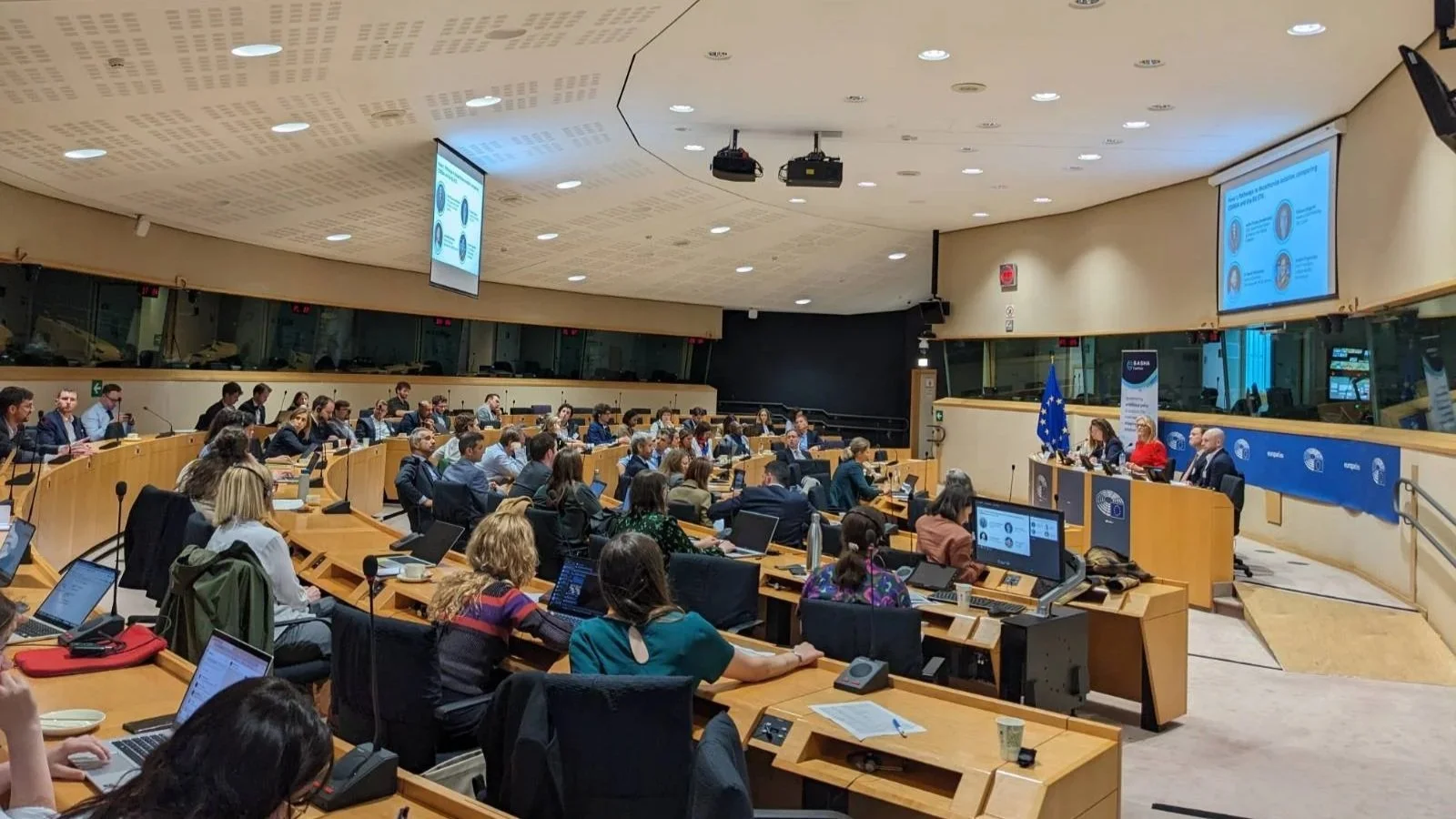
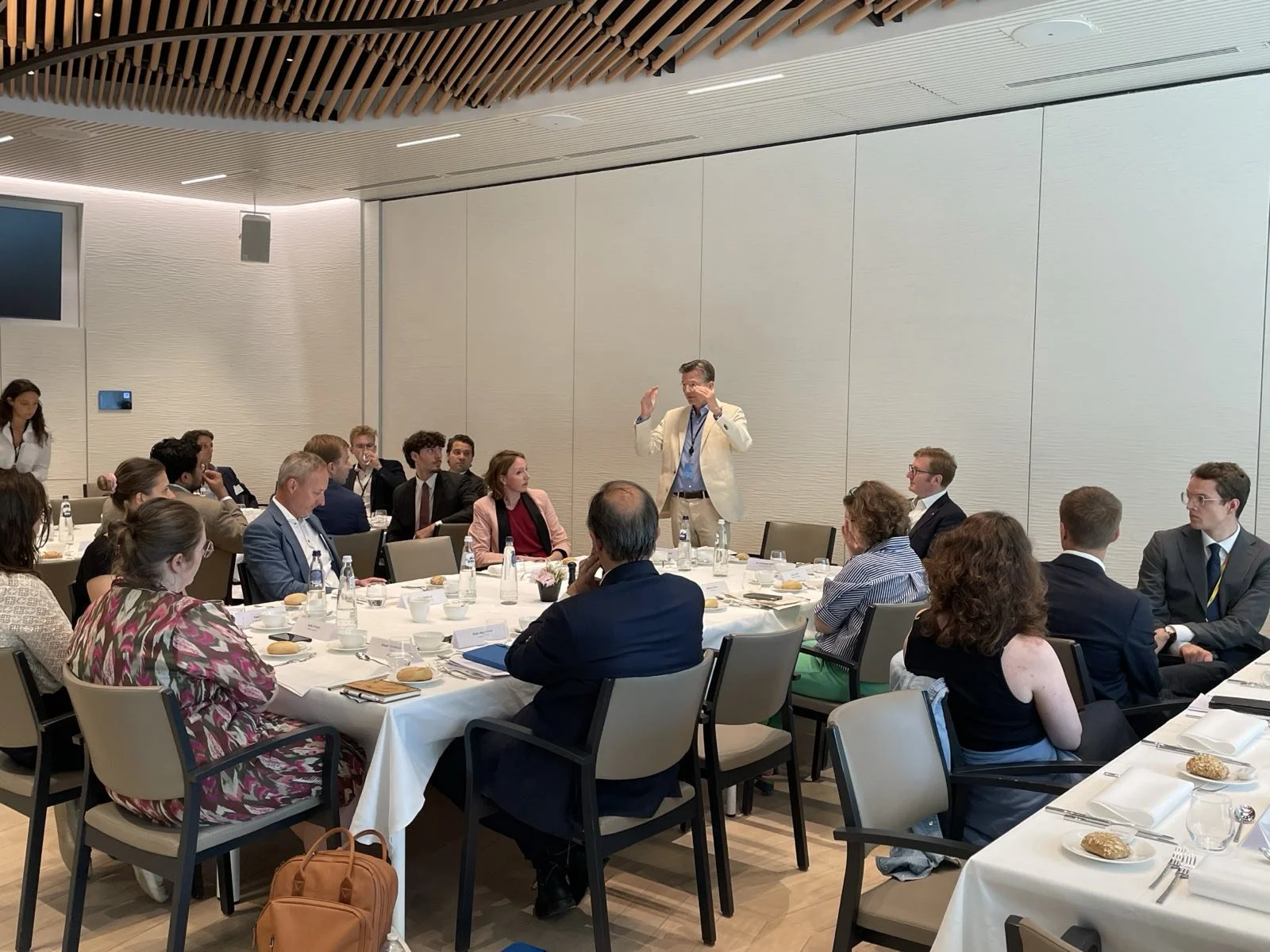
In July, we were hosted by Members of the European Parliament Gerben-Jan Gerbrandy and Jan-Christoph Oetjen in the Parliament in Brussels. Our event, Delivering on the EU mandates: Scaling E-Fuels to Decarbonise Aviation and Maritime, brought together policymakers, parliamentarians, industry representatives and NGOs to discuss e-fuels, funding, and how to get to decarbonised shipping and aviation sectors.
A main theme discussed was the limits of tech neutrality. As was seen with losing the lead in the electric vehicle market to China, delayed investment into e-fuels will only repeat this dynamic. Europe can develop a competitive, energy secure and sustainable market for aviation and shipping decarbonisation technologies.
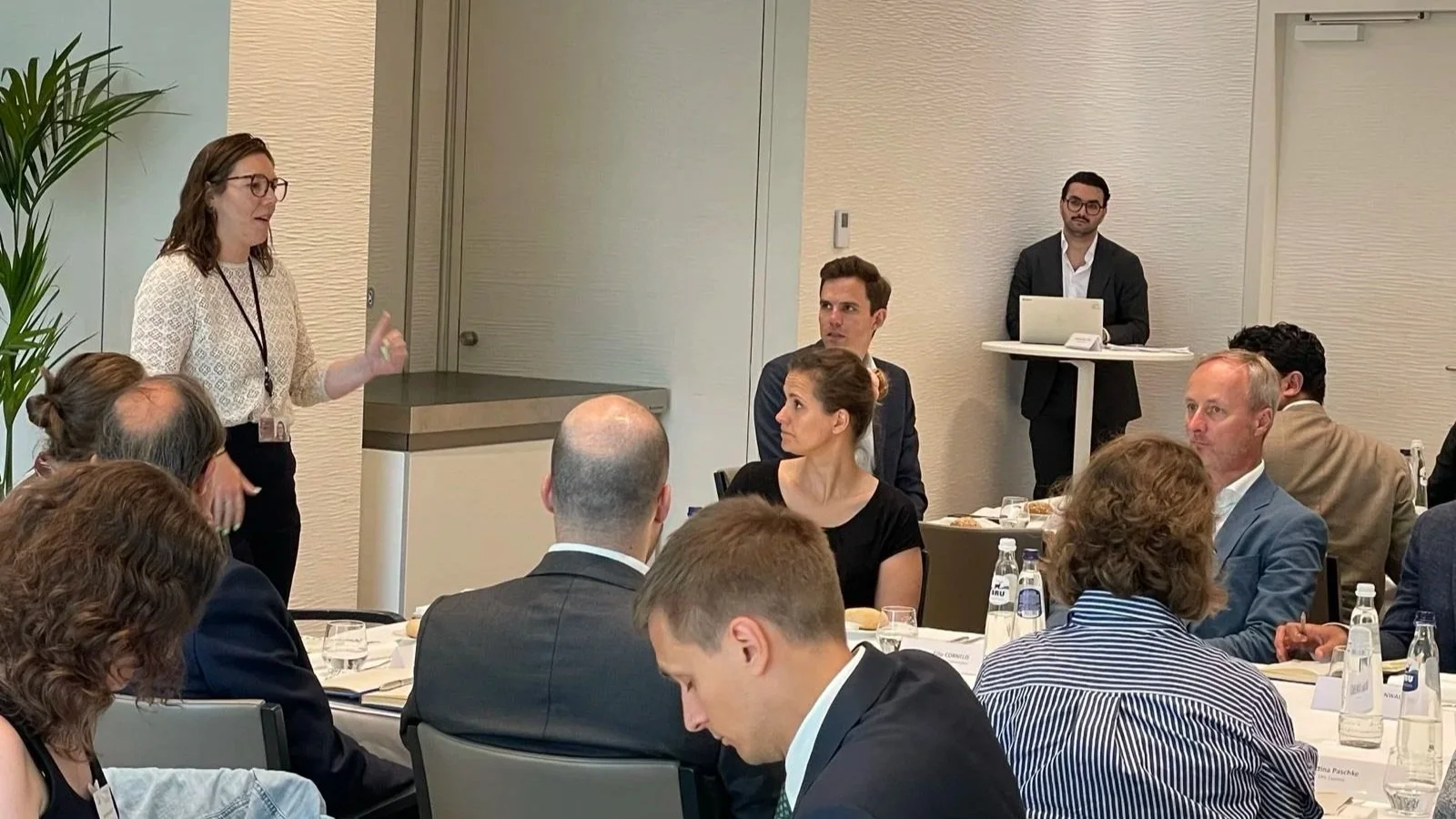
Aoife speaking at the SASHA Coalition event Delivering on the EU mandates: Scaling E-Fuels to Decarbonise Aviation and Maritime, at the European Parliament.
The continent should not wait for global regulation – it needs to take the reins sooner rather than later. The International Civil Aviation Organization (ICAO)’s Carbon Offsetting and Reduction Scheme for International Aviation (CORSIA) is not fit for purpose as it at best only offsets, rather than actually reduce, emissions – and only those over a high baseline. With the delay at the IMO, and the disappointing progress at ICAO, it is up to the EU to provide investors with the confidence they need to invest in e-fuels and zero carbon emission technologies.
6) What we’re looking forward to in 2026: expanding the Emissions Trading System
The EU emissions trading system (ETS) is a ‘cap and trade’ system, meaning that there is an EU-wide limit on the total amount of emissions from activities within the scope of the system. Within that cap, emission ‘allowances’ are auctioned off or allocated to companies and can be traded between companies, rewarding those quick to cut emissions. The system reduces the number of allowances year by year so that by 2045 the allowances reduce to zero, driving real emissions reductions.
Part of our work in 2026 will include ensuring the ETS is expanded to cover extra-EEA flights. Since 2012, the development of CORSIA has been used to justify the exemption of international flights. This free pass has had grave climate consequences, leaving around 1,1bn tCO2 emissions unregulated between 2012 and 2023, the equivalent of Greece’s total emissions in the same period. This amounts to €26bn in uncollected revenues that could have been used for climate action.
The exemption is set to expire in 2027. Failing to bring extra-EEA aviation into the ETS in the 2026 revision would see a further 1,3bn tCO2 unregulated between 2027 and 2035, and €130bn lost in uncollected revenues. Meanwhile, European aviation is projected to drastically overshoot EU climate targets, and truly green solutions are not scaling at the pace needed.
The ETS is a leading piece of regulation for climate and future industries, as it prices carbon and allows revenue creation for decarbonisation. We will be working to ensure it remains and becomes as ambitious as possible
2025 has been an incredible year for SASHA but also for decarbonising shipping and aviation. The SASHA Coalition membership demonstrates that future technologies exist, and 2026 will be a key year for scaling these up to compete with fossil fuels.