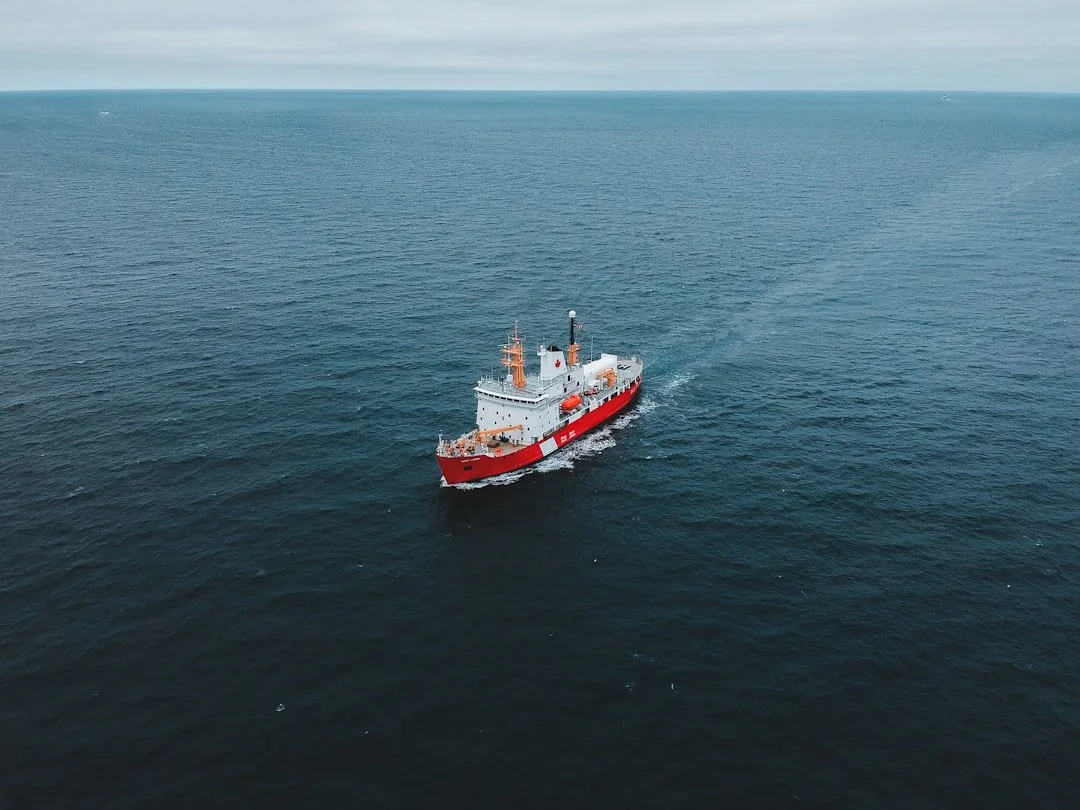

Shipping
Shipping is a major producer of greenhouse gases emissions, yet is not reducing its climate impacts at the pace needed…
What’s the problem?
Shipping is responsible for 3% of global carbon dioxide emissions, and this number is still rising. Without urgent action, global maritime greenhouse gas emissions could rise by up to 130% of 2008 levels by 2050.
Despite the huge scale of this problem, the measures we have in place to regulate shipping emissions are still not ambitious enough to catalyse the transition to the most sustainable solutions at the pace needed.
The technologies needed to reduce the majority of shipping emissions already exist. These are derived from renewable energy, either stored in a battery or used to produce renewable hydrogen that powers a fuel cell or is subsequently used to create synthetic e-fuels.
But these technologies faces steep hurdles to reach commercial-scale development and deployment. The regulatory frameworks designed to help developers of the most sustainable solutions overcome their challenges are not yet ambitious enough. Indeed they still channel limited resources to unsustainable alternative fuels like biofuels, and fossil LNG.
International shipping's projected emissions pathway
Data from Climate Action Tracker
What we do
The SASHA Coalition members include front-running companies developing the most sustainable maritime energy solutions.
As a coalition we bring these companies’ voices to EU and UK politicians and policymakers to demonstrate what policy is needed to support the development and commercialisation of the technologies they are developing at the necessary speed and scale, and accelerate the transition of maritime shipping to a sustainable future.
Our members and knowledge partners
Decarbonising EU shipping
How big is the problem?
Between 3-4% of the European Union’s carbon emissions come from maritime transport. That amounted to 124 million tonnes of CO2 in 2021.
What policy is in place?
The EU’s system for regulating shipping’s climate impacts has two central pillars: FuelEU Maritime and the EU emissions trading system (ETS).
FuelEU Maritime
FuelEU Maritime came into force in 2025 and is designed to boost demand for clean technologies. It does so by setting targets for ships embarking in European ports to reduce their greenhouse gas (GHG) intensity. Ships who do not reduce their GHG intensity by the required amount face a fine.
Each year the target becomes more stringent, ultimately aiming to reach an 80% reduction relative to a 2020 baseline by 2050.
The EU emissions trading system (ETS)
The EU ETS was extended to cover maritime shipping in 2026, and puts a price on maritime emissions by requiring ships above 5,000 gross tonnage to purchase allowances that cover their emissions. If a shipowner does not have enough allowances to cover all its emissions then it pays a penalty. It covers 100% of domestic voyages and 50% of international voyages.
Each year the number of available allowances incrementally decreases, meaning the industry is incentivised to decarbonise over time or face increasing costs. Member States are obliged to re-invest the revenues generated from the ETS into climate action.
How is SASHA driving change?
The SASHA Coalition is advocating for policy change to ensure the companies developing the most sustainable solutions are proportionate support to develop and commercialise their technologies. We focus on the following regulations:

Explore all our work on EU shipping
Decarbonising UK shipping
How big is the problem?
Shipping is responsible for roughly 4.5% of the UK’s GHG emissions, producing an annual 16.4 million tonnes. According to the UK Climate Change Committee, shipping has to reduce its GHG emissions by 0.4 million tonnes to meet its sixth Carbon Budget trajectory.
What policy is in place?
The UK emissions trading scheme (ETS)
The climate impact of UK shipping is regulated primarily by the emissions trading scheme (ETS), which was extended to cover shipping emissions in July 2026. Like in the EU, this puts a price on all in-scope shipping emissions and incentivises reductions by gradually lowering the cap of available allowances.
However, the UK ETS scope only covers 15% of shipping emissions. This is due to two main exemptions for emissions from:
Vessels under 5,000 GT, ~20% of total emissions, and;
International voyages, ~74% of total emissions.
Maritime Decarbonisation Strategy
The 2025 Maritime Decarbonisation Strategy also makes moves to reduce shipping emissions. The strategy incorporated the International Maritime Organization (IMO) 2023 Strategy’s emission reduction targets and stated the Department for Transport’s intention to introduce a marine fuel regulation.
How is SASHA driving change?
The SASHA Coalition is advocating for policy change to ensure the companies developing the most sustainable solutions are proportionate support to develop and commercialise their technologies. We focus on the following regulations: