Takeaways from Aeronet 2026: alternative fuels need stronger regulation
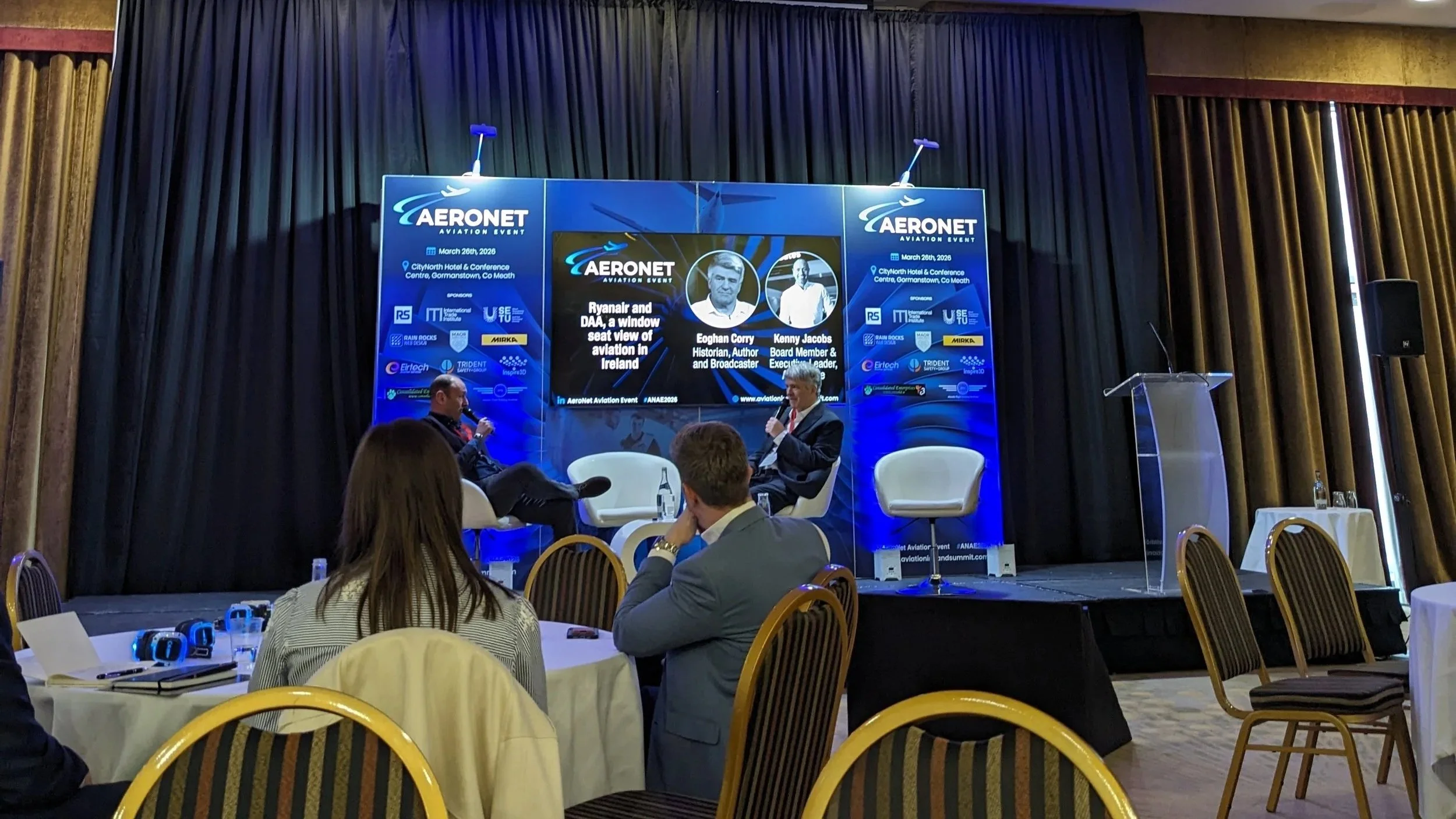
At the end of March, Sorcha Tunney, our Ireland Manager, and Sabrina Khan-Dighe, our Membership and Advocacy Officer, went to the Aeronet Conference in Ireland last week. Unfortunately, much of the policy discussion was centred around ‘reshaping’ the e-fuel sub-mandates in ReFuelEU Aviation. In this blog, they run through their main takeaways…
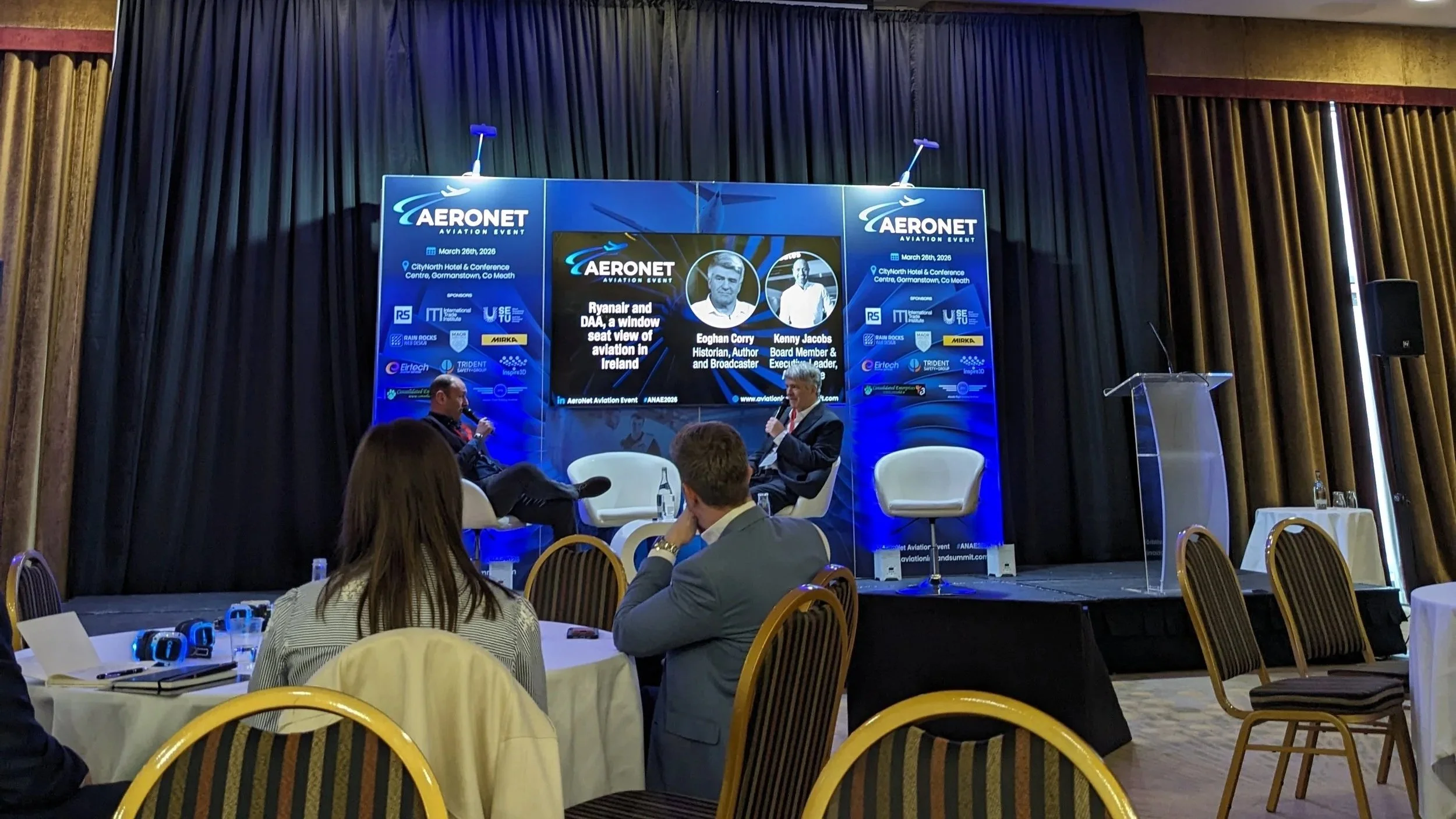
Sorcha – Ireland’s EU presidency and the emissions trading system
Ireland is currently preparing to take the Presidency of the Council of the European Union in July 2026, and the Aeronet Conference highlighted just how significant this opportunity is, not only for leadership within Europe, but also for shaping the future of sustainable aviation.
A key priority during Ireland’s Presidency will be guiding pivotal negotiations for aviation policy: the opportunity to end the EU emissions trading system (ETS) exemption for flights departing European airports. This policy is central to incentivising innovation in cleaner technologies across the sector, and subsequently cutting emissions.
While sustainability was not the dominant theme of the conference, contributions from Joe Gill Director of Goodbody Capital stood out. He emphasised that Ireland has the potential to become a global leader in aviation decarbonisation, a “beacon” for countries committed to meaningful climate action. Importantly, the technologies needed to achieve this transition are already emerging, e-kerosene for long-haul aviation, and electric and hydrogen aircraft for short-haul routes
The pathway is increasingly clear, but progress depends on strong and consistent policy support. Frameworks that encourage investment in the most sustainable alternative aviation fuels (i.e., e-kerosene), alongside electric and hydrogen innovation, are critical.
Europe has built a regulatory framework to serve as a practical mechanism to accelerate this transition, and the EU ETS is its cornerstone. What is required now is political commitment to strengthen it to support Europe’s and Ireland’s leading green entrepreneurs to contribute to clean industrialisation to their full capacity.
Ireland’s Presidency offers a unique window to do just this. It can decisively champion the ETS to drive investment and position Europe at the forefront of global aviation innovation and decarbonisation. This means above all ending international flights’ undue exemption from the EU ETS.
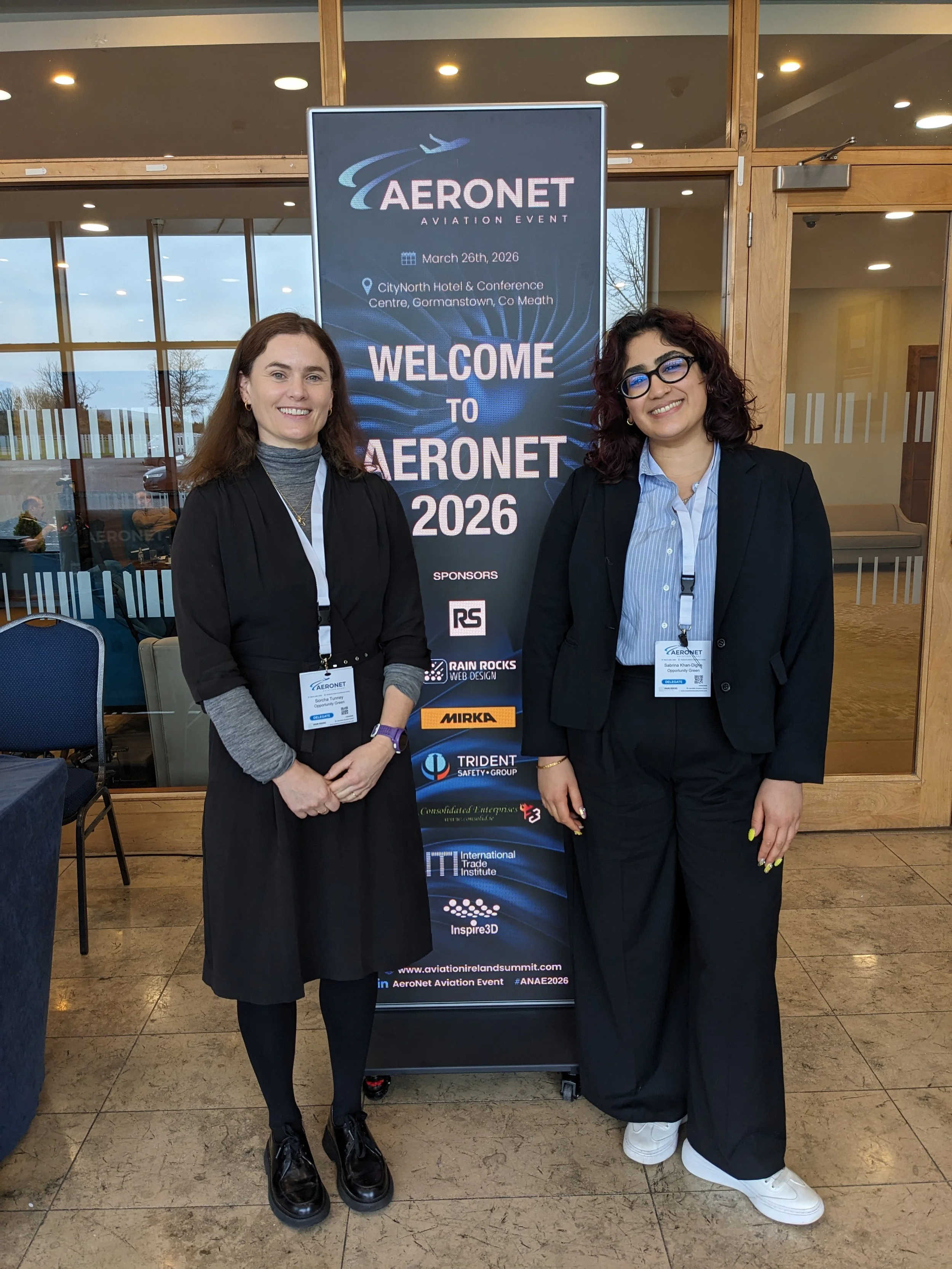
Sorcha and Sabrina at the Aeronet conference.
Sabrina – RFEUA mandates and their importance
At the conference, we heard some airlines pushing to ‘rethink and realign’ the e-kerosene mandates, because of the current lack of large-scale e-kerosene projects reaching final investment decisions (FID). Whilst it’s true that there is no silver bullet to aviation decarbonisation, e-kerosene, the most sustainable drop-in fuel (alongside zero carbon emission technologies), will be key to decarbonise aviation. E-kerosene presents the most feasible long-term solution for a few main reasons:
E-kerosene can be produced at scale in the EU, unlike biofuels which face limited feedstock availability. This is a huge opportunity to reduce dependence on imported fossil and biofuels, and develop a competitive and sustainable aviation fuel industry.
E-kerosene does not damage nature through direct and indirect land use changes, as biofuels may, and can be produced with the lowest lifecycle greenhouse gas emissions.
E-kerosene’s sustainable credentials are easily certifiable, while biofuel imports have been riddled with fraud.
E-kerosene does not risk causing food insecurity by incentivising the use of crops for fuel and causing food price inflation.
For these reasons, instead of attempting to water down a regulation which provides crucial investment certainty for synthetic fuel producers, shouldn’t airlines and fuel suppliers be working to ensure the mandates can be met?
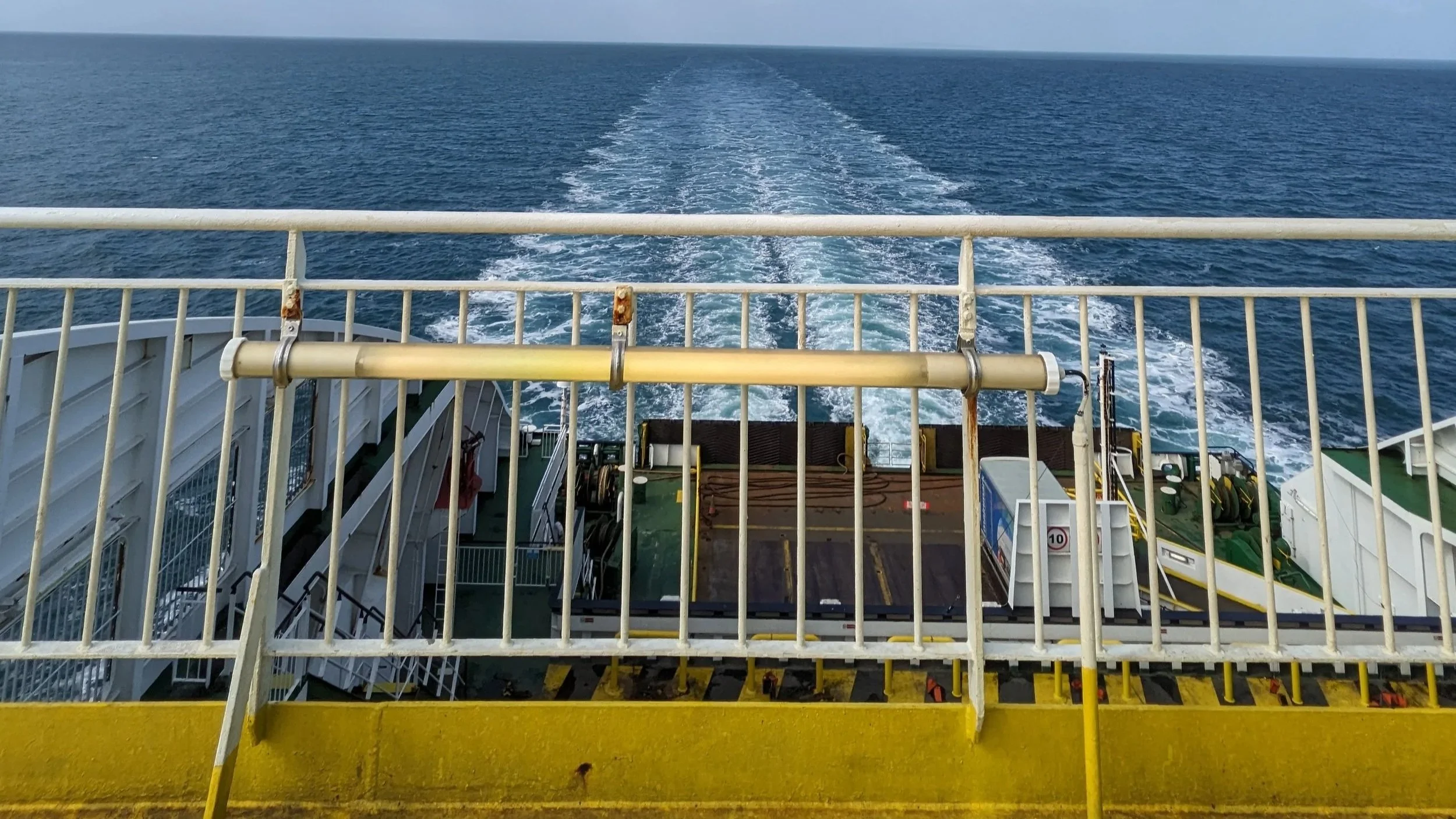
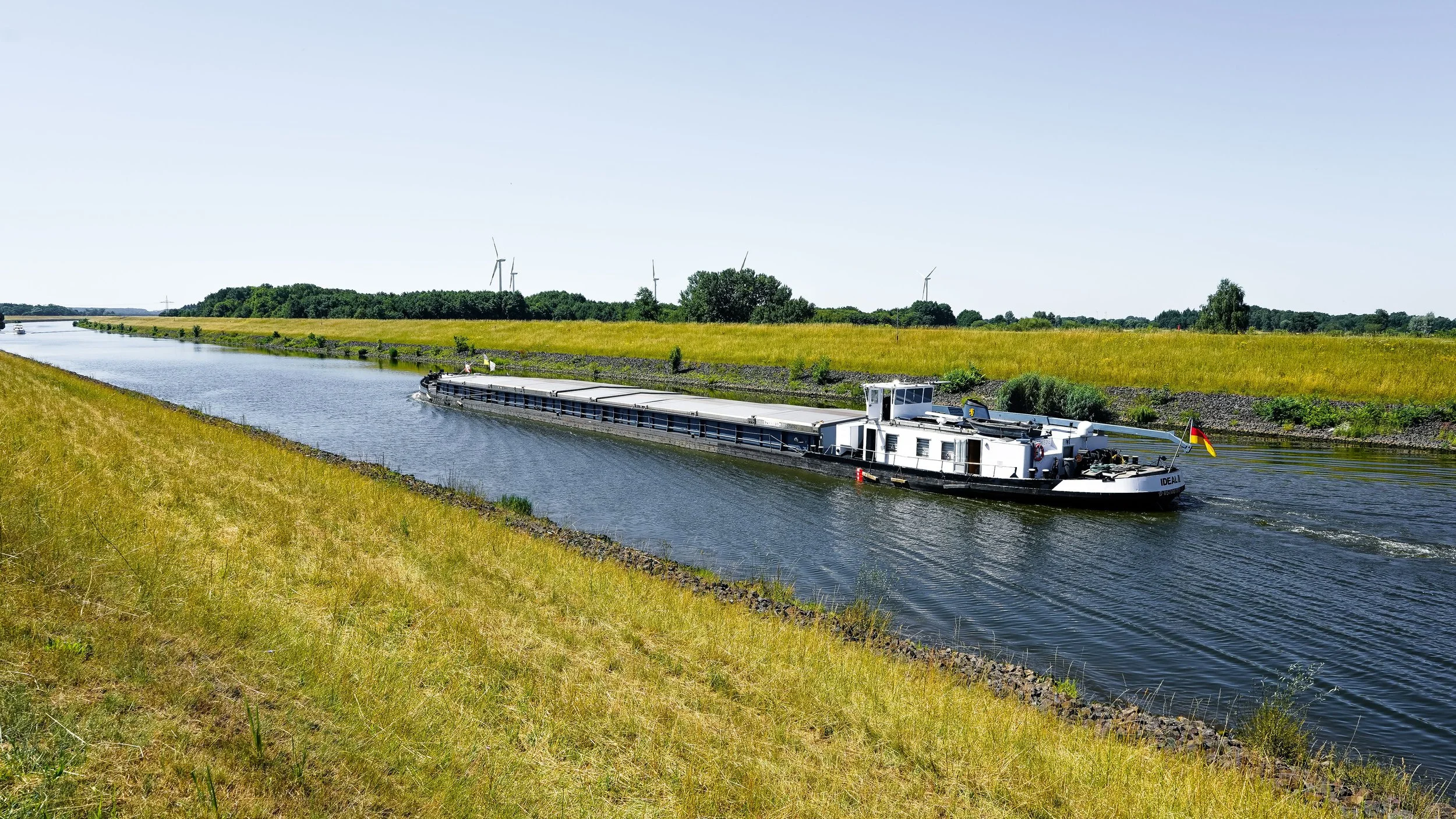
Sabrina’s view while getting sail & rail to Ireland from the UK.
The mandates and the penalties for non-compliance are key for e-kerosene projects: they provide certainty for investors and ensure synthetic fuels can access the capital they need to operate their projects. Any delay or weakening of the mandates could permanently undermine investor confidence in e-kerosene, which threatens the innovative companies developing 40+ projects in Europe, with half the world’s e-kerosene capacity, and will not help to drive down costs. 2026-27 are crucial years to get more projects to reach this FID. That’s why the EU has launched a double-sided auctioning pilot project and an eSAF Early Movers Coalition aimed at getting the first European e-kerosene projects to FID.
The e-kerosene sub-mandate in the EU states that there needs to be a 1.2% share of e-kerosene in all EU airports from 2030. Airlines and fuel suppliers therefore have 4 years to work with e-kerosene producers and others to ensure this target can be met. They should not waste time redirecting efforts into delaying mandates – a situation which would be detrimental to the competitiveness of the EU and the climate.