Ireland takes the helm of the EU Council Presidency this week, just as the European Commission looks at closing the loophole that exempts international flights from the Emissions Trading System (ETS). In this guest post, Dr David Mulrooney, Head of Business Development at NEG8 Carbon, argues that a stronger ETS isn't a burden on industry but the investment engine Europe's – and Ireland's – clean-tech innovators need to scale.
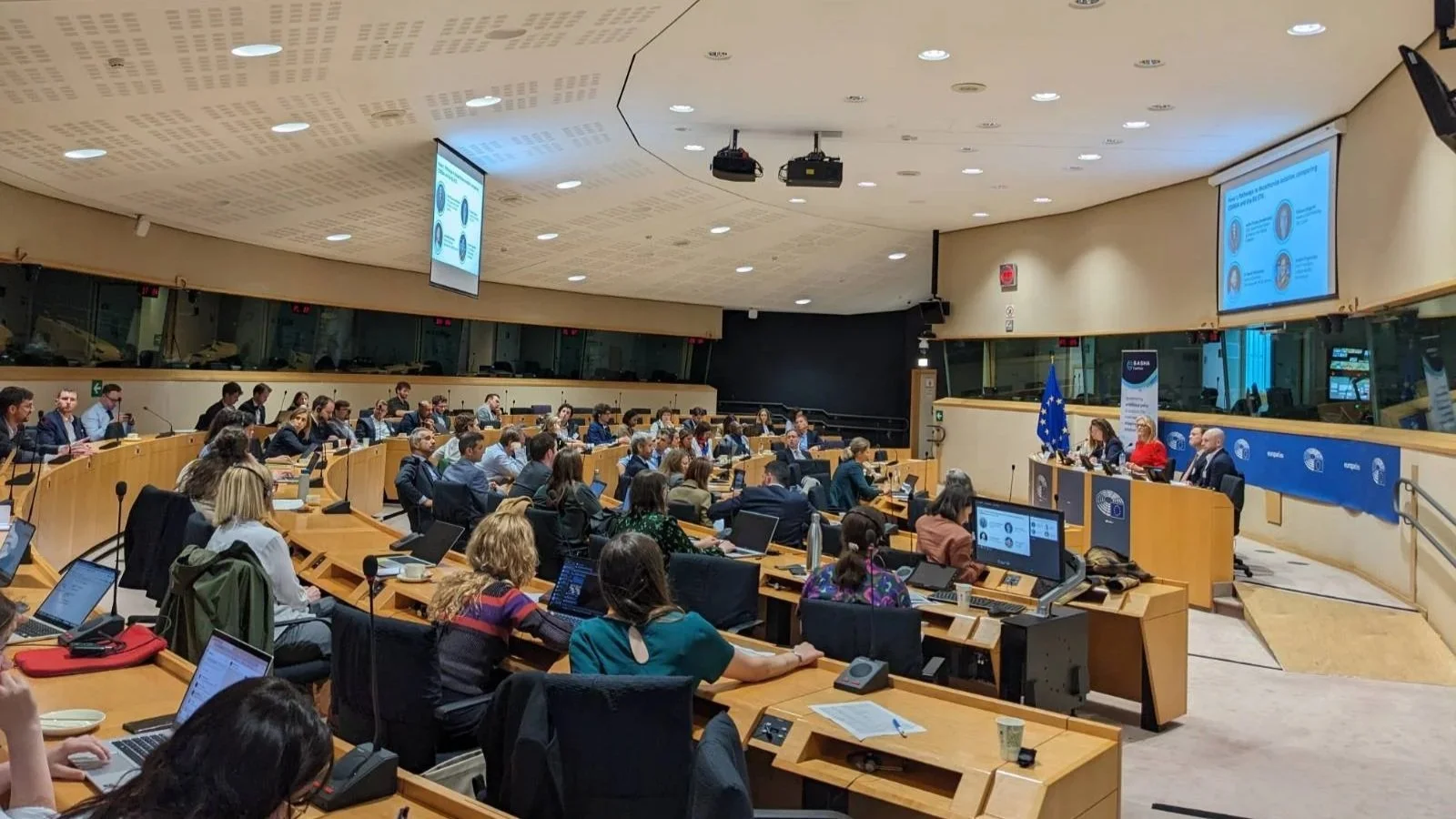
Our roundtable at the European Parliament on the EU ETS for aviation and scaling synthetic fuels.
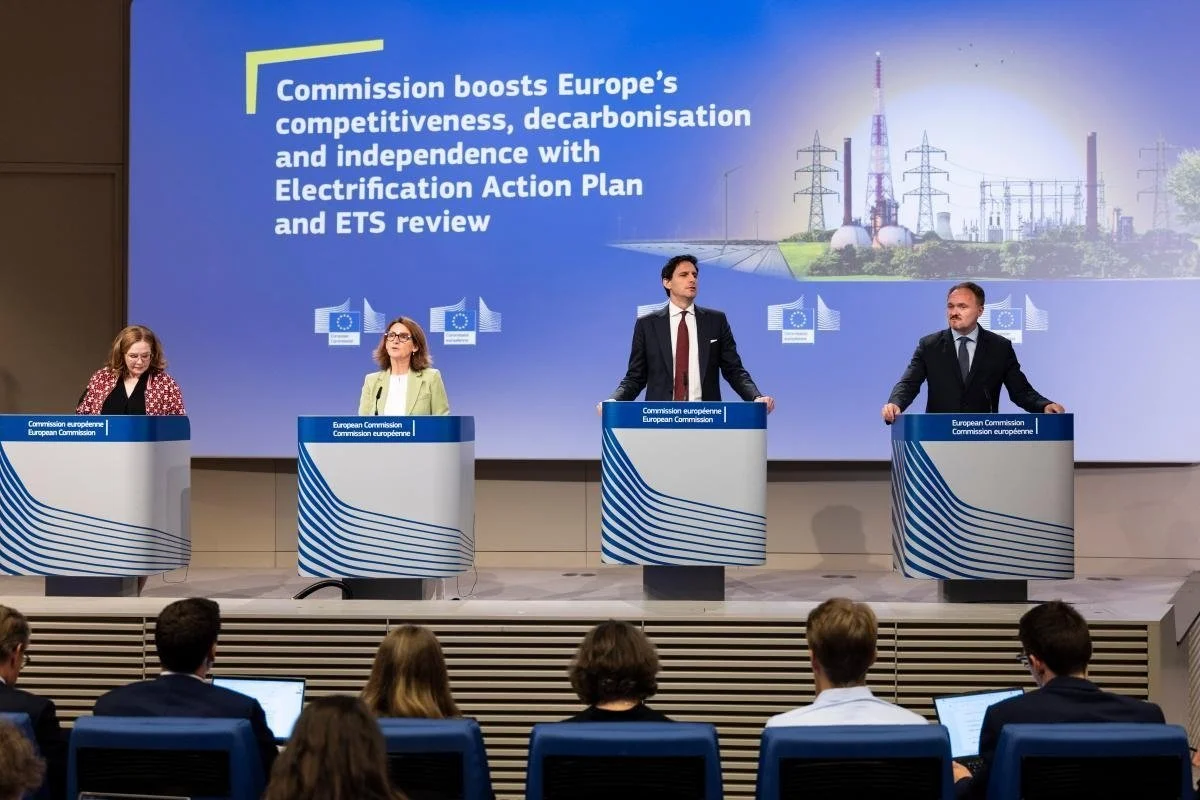
Ireland assumes the Presidency of the EU Council this week, and its first real test is already set. This week, the European Commission will decide whether to propose a major reform to the Emissions Trading System (ETS) and end the undue exemption for flights leaving the EU.
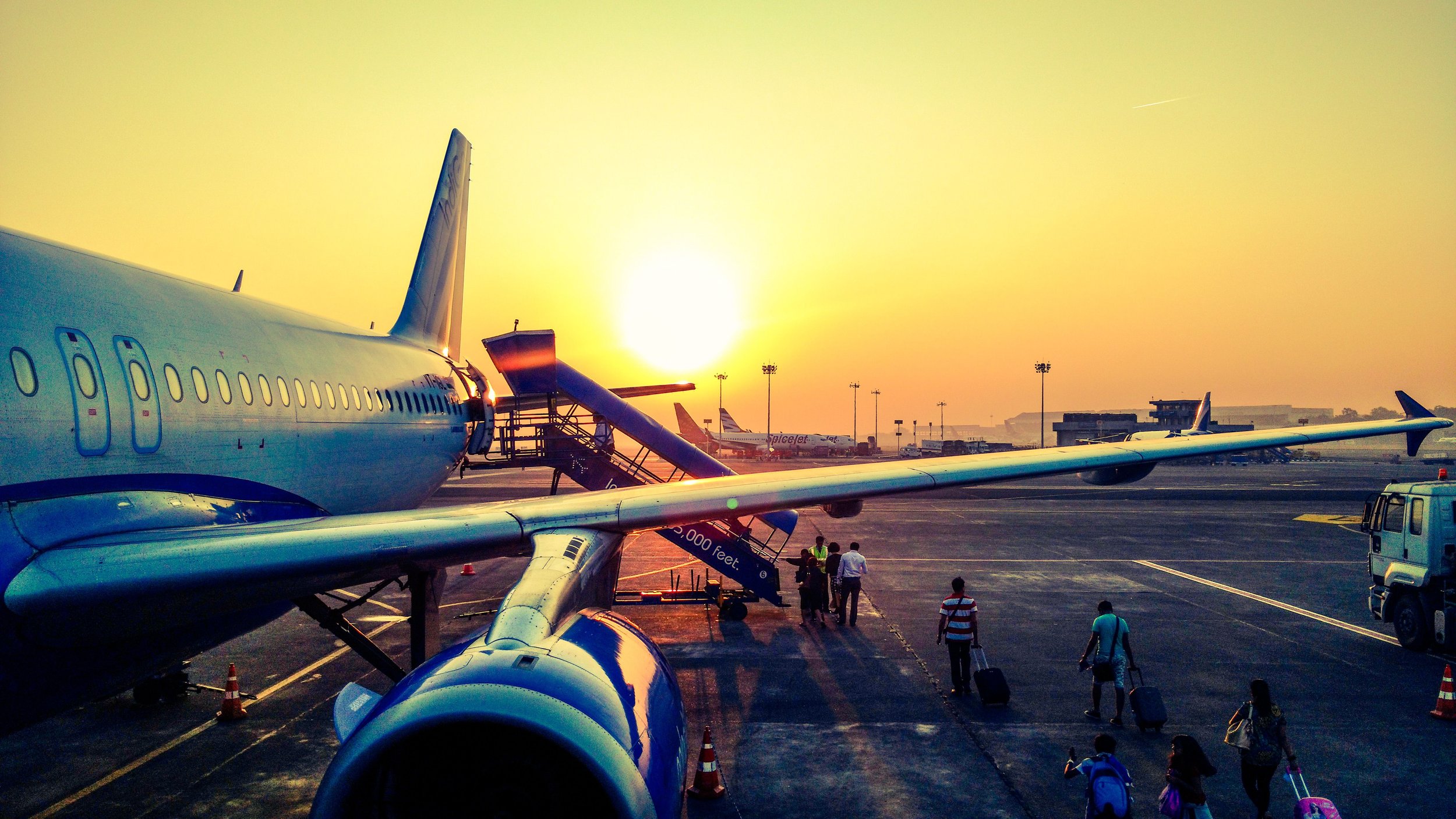
This currently leaves 60% of aviation emissions unpriced. For a new Presidency looking to establish its tone early, this is an opportunity not just to boost the fight against climate change but also to throw its weight behind Europe’s – and Ireland’s – aerospace innovators.
Last week, 28 European companies developing sustainable aviation technologies – including businesses based in Ireland like NEG8 Carbon – wrote an open letter to President von der Leyen and seven Commissioners, urging them to end the international flights exemption. We are a collective of technology developers, fuel producers, and aerospace innovators making a straightforward commercial argument: that the ETS is the mechanism our industries depend on to attract investment at scale.
The ETS is a boon, not a burden
It is worth pausing on that distinction, because the public debate around the ETS tends to frame it as a burden on industry and a drag on competitiveness. But our letter demands a radical reframe. The ETS is the EU's most effective instrument for directing investment toward next-generation industry.
Since its launch over 20 years ago, the ETS has provided a stable, predictable price signal that has unlocked investment in clean technology across the continent — not because companies were forced to act, but because the economics began to make sense. It also unlocks new financial flows to channel into research and development, paving the path to commercialisation.
When polluters receive a waiver on their emissions, however, it is Europe, and once again its innovators, who pay. Between 2012 and 2023, €26bn in ETS revenues was left on the table because international flights were excluded. A further €79bn is at risk by 2035 if we don’t act now.
The market mechanism businesses need
For us, this is not an abstract policy question. We are a Waterford-based deep-tech company developing Direct Air Capture systems – technology that filters CO₂ from the air using low-grade industrial waste heat. That captured carbon is a critical feedstock, alongside hydrogen, for synthetic aviation fuels, otherwise known as e-SAF or e-kerosene. Synthetic fuel made from renewable electricity, water and captured CO2 is the most scalable and sustainable path to decarbonising aviation.
The revenue generated by extending the ETS to international flights, channelled through the Innovation Fund and the proposed Industrial Decarbonisation Bank, is critical for the success of our industry. The stronger and more consistent the carbon price signal, the stronger the investment case for the infrastructure we sell into.
ETS is not a policy backdrop for us. It is the market mechanism our business is built on.
The comparison that resonates with me is solar and batteries. A decade ago, both were routinely dismissed as too expensive, too dependent on subsidy, and too niche to ever compete with established energy sources at scale. Then, industrial policy led to sustained investment in manufacturing capacity, standardised design, chemistry and process engineering saw costs fall by orders of magnitude. E-kerosene is at precisely that inflection point today. The cost curve will only move if the investment happens now, and the ETS is the mechanism that makes that investment rational.
What’s in it for Ireland?
There is also a specifically Irish dimension to this. Ireland has built remarkable prosperity on foreign direct investment – from technology multinationals that have made Dublin and Cork internationally significant centres of employment and expertise. We should be proud of that. But in the past few years we’ve seen how exposed that model can be. When a major technology company restructures its global operations, decisions made in California or Seattle impact workers in Limerick and Cork. Those jobs can move – and they can move quickly.
Indigenous deep-tech is structurally different. Jobs built on Irish intellectual property, anchored to production infrastructure here, and commercially supported by European policy, do not move when a head office changes its mind. They compound – by generating supply chains and exporting capability that remains in Ireland. ETS revenues directed into Direct Air Capture and e-kerosene represent exactly this kind of economic dividend.
A surer route to energy security
Then there’s energy security. Jet fuel prices surged by an average of €88 per person on international flights in March alone, driven by the fuel crisis triggered by the Iran war. Against that kind of volatility, the surcharges associated with European carbon pricing look modest. Reducing aviation's dependence on fossil fuels is not just a climate objective, it is a strategic one, and this becomes more obvious with every geopolitical disruption that ripples through the energy market.
The alternative to a full-force ETS is the International Civil Aviation Organization’s CORSIA – the Carbon Offsetting and Reduction Scheme for International Aviation. CORSIA is structurally unfit for purpose. It requires airlines to only offset, not reduce, emissions, and only those above a high baseline, not their full footprint, and even then offset quality is questionable. Critically, the revenue flows to private actors outside Europe rather than back into the sector through mechanisms like the Innovation Fund.
The Irish Presidency coincides almost exactly with this decision, an opportunity to be seized. Ireland must make the case that ending international flights’ ETS exemption is not a penalty but an investment in the industrial future, global competitiveness, and energy sovereignty not just of Europe but also of Ireland.
The world needs affordable sustainable aviation fuel and Direct Air Capture at scale. Europe is positioned to lead in both. And Ireland — with its high-value manufacturing, its university research base, and its growing clean technology cluster — is well placed to be a significant part of that story. The Presidency puts Ireland in the chair at the precise moment this decision is made. The question is what it does with it.
By Dr David Mulrooney, Head of Business Development, NEG8 Carbon
Read our ETS policy briefing for our full recommendations for the upcoming ETS revision.