Pricing pollution to boost decarbonisation – takeaways from our EU ETS roundtable
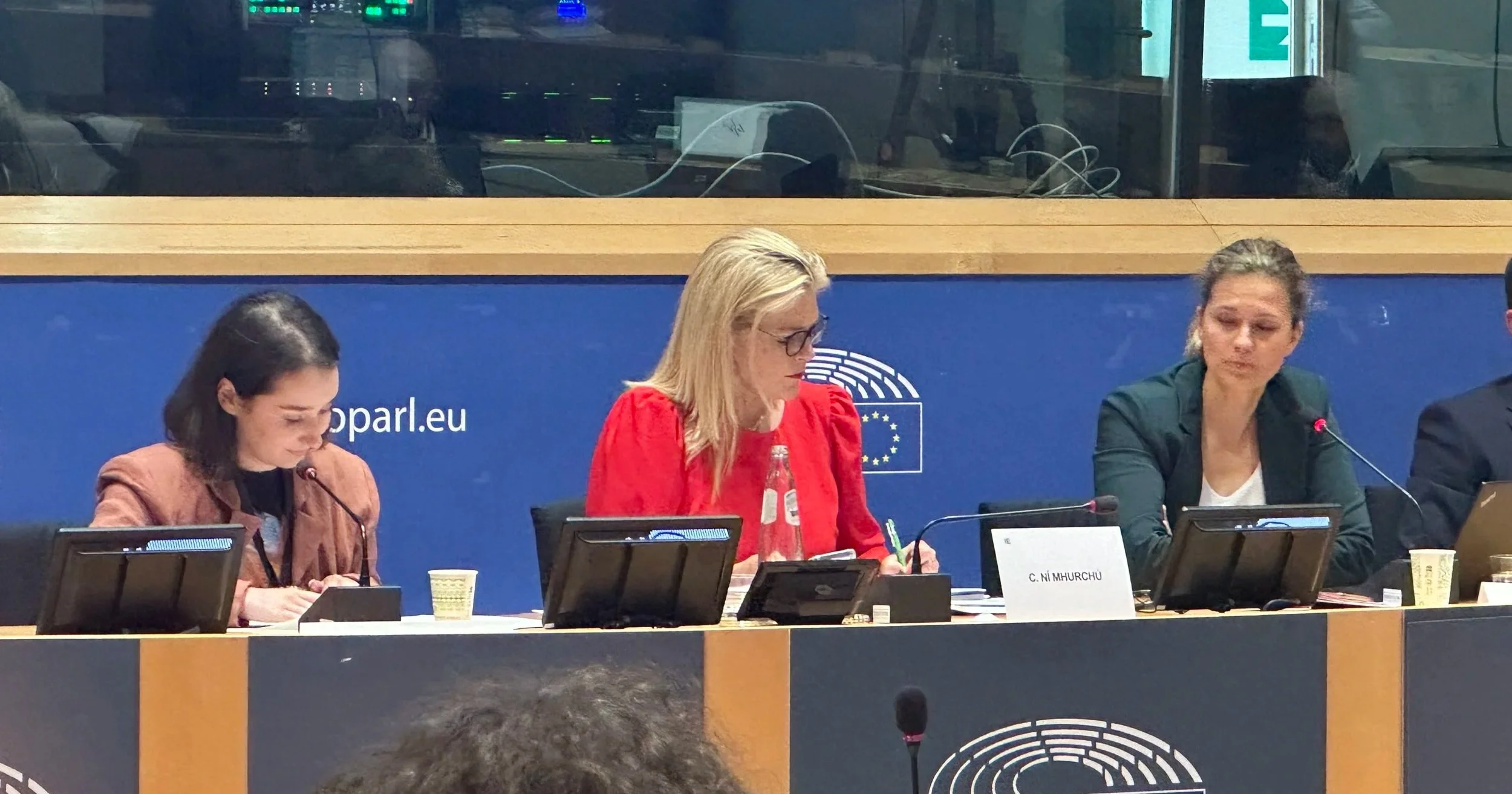
Earlier this month, we were delighted to convene a full room of policymakers, industry representatives, and key stakeholders at the European Parliament to discuss how the upcoming revision of the EU ETS can support the scale-up of synthetic aviation fuels (also called e-kerosene, or “e-SAF”) and zero carbon emission aviation technologies. Hosted by Irish MEP Cynthia Ní Mhurchú, this discussion highlighted the importance of the EU ETS for innovative businesses, and how ending the exemption of international flights can accelerate the transition.
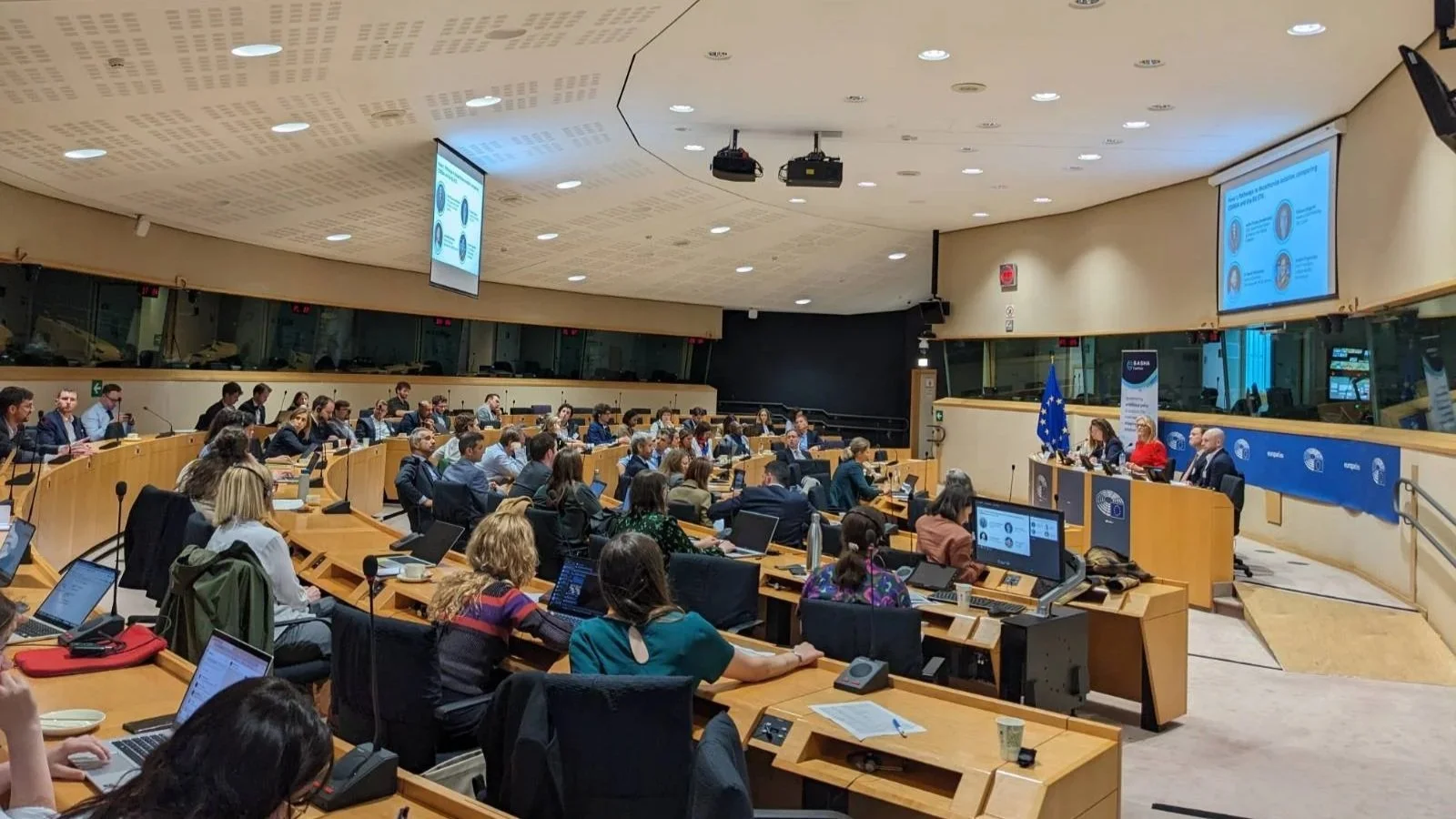
Our roundtable at the European Parliament on the EU ETS for aviation and scaling synthetic fuels.
Our roundtable discussion came at a critical moment: in July, the European Commission is expected to publish both its assessment of CORSIA and legislative proposals for the ETS revision that could finally propose to end the exemption in the EU ETS to cover international flights departing Europe. This is also a significant moment for Ireland's Presidency of the EU Council, which begins in July, with progress on the EU ETS review for aviation and maritime having been identified as a key legislative priority.
Here are our key takeaways from the event.
Climate ambition, competitiveness and energy sovereignty are not competing objectives
Opening the event, MEP Cynthia Ní Mhurchú stressed that the coming decade will be decisive if Europe is to meet its 2040 climate targets and achieve climate neutrality by 2050. She emphasised that policymakers cannot afford to take "baby steps" and that businesses and investors need long-term certainty to invest in the technologies required for the transition.
Her message was echoed by Lydia Rooney, Transport Attaché and Aviation Lead at Ireland's Permanent Representation to the EU, who reaffirmed that climate objectives, including the EU's 2040 targets, will remain a priority during Ireland's Presidency.
The SASHA Coalition’s founder and Director, Aoife O’Leary invited us to rethink the definition of competitiveness, stressing that it should not be measured solely by the short-term performance of industries, but by Europe’s long-term ability to maintain prosperity and protect its standards of living from climate damage. Europe is already the fastest warming continent and climate impacts, including recent deadly heatwaves, are imposing significant economic and social costs. Currently, many of those costs are borne by people who do not fly rather than by those responsible for these emissions.
At the same time, participants repeatedly highlighted that decarbonising aviation is not only about reducing emissions. It is also about building EU industrial capacity, creating high-value jobs, and strengthening energy sovereignty. This latter point has become increasingly important as recent years have exposed the vulnerability created by Europe's dependence on imported fossil fuels, with geopolitical instability contributing to repeated fuel price shocks.
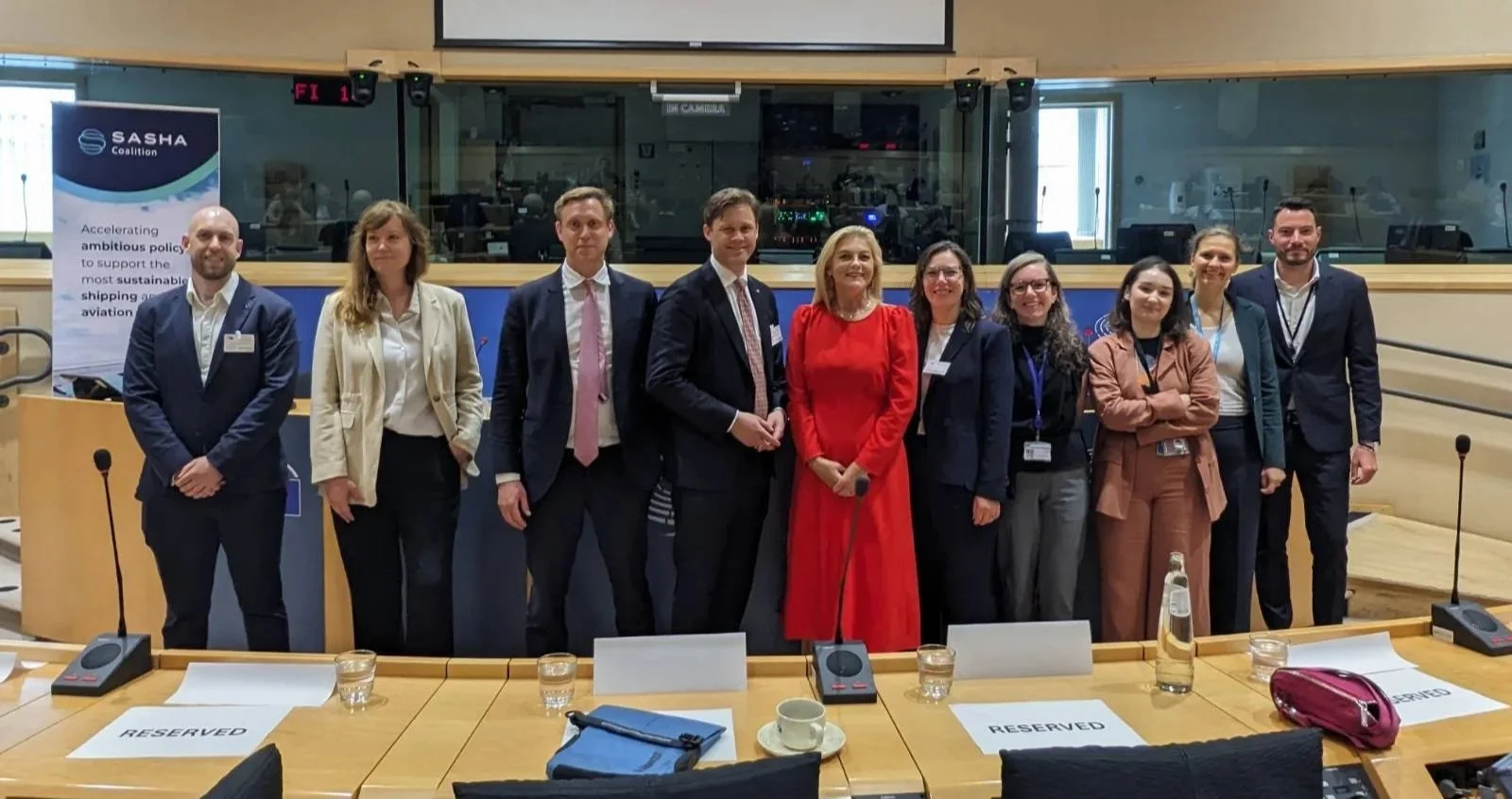
From left: David Mulrooney (Business Development Manager at NEG8 Carbon), Polona Gregorin (Head of Unit for Mobility at DG CLIMA), Felix Leworthy (co-founder and CCO at ETFuels), Anders Fagernæs (Vice President, Sustainability at Norwegian), MEP Cynthia Ní Mhurchú, Aoife O’Leary (CEO of Opportunity Green and Director of the SASHA Colition), Lydia Rooney, Transport Attaché and Aviation Lead at Ireland's Permanent Representation to the EU), Delphine Kaczorowski (EU Advocacy Manager at the SASHA Coalition), Ewa Oney (Deputy Head of Unit DG MOVE’s Aviation Policy Unit), and Giovanni Zucchetta (EU Public Affairs Lead at Ryanair).
The ETS works, but aviation remains a major gap
Polona Gregorin, Head of Unit for Mobility at DG CLIMA, highlighted that the EU ETS has helped cut emissions in covered sectors by around half since 2005 while economic activity has continued to grow. However, aviation remains one of the sectors where emissions continue to increase and are expected to keep rising.
Aoife O’Leary argued that this reflects a fundamental weakness in the current system – and indeed this flaw is at the heart of aviation’s privileged regulatory regime: the EU ETS currently covers only flights inside the European Economic Area (EEA), leaving nearly two-thirds of aviation emissions linked to Europe unpriced.
Extending the ETS to international flights departing the EEA would therefore increase emissions coverage to ensure that all emitters contribute more consistently across the sector. It would address the inconsistency whereby passengers flying within Europe face a carbon price while those travelling on longer international routes do not.
The discussion also touched the limits of CORSIA to address international aviation emissions. CORSIA applies to much fewer emissions than the ETS and relies exclusively on offsets. Several speakers recommended that a larger share of revenues generated through the ETS should be reinvested in the European aviation sector. By contrast, CORSIA does not generate any investable funds, and therefore no incentives to develop truly sustainable technologies in Europe.
ETS revenues should help fund the transition
The discussion led to the question of how revenues generated through the ETS should be used.
Polona Gregorin highlighted that carbon pricing can help to scale so-called ‘sustainable aviation fuels’ through the SAF allowances scheme and the Innovation Fund but she also encouraged stakeholders to engage with Member States on how ETS revenues are spent, as these revenues could play an important role in financing projects.
Participants broadly agreed that extending ETS coverage would generate additional revenues that could be reinvested into aviation decarbonisation. Several speakers argued that these funds could help support e-kerosene deployment, reduce investment risks and accelerate the development of next-generation aviation technologies.
The discussion also touched on concerns around the costs associated with carbon pricing. Airline representatives noted that ETS costs are already affecting the sector and warned of potential impacts on margins and connectivity. Others pointed out that Europe remains heavily exposed to fossil fuel price volatility and that investing in domestic clean energy production can reduce this dependence over time. In that sense, the debate is not only about the cost of the ETS, but also about the cost of continuing to rely on fossil fuels.
Financing is the biggest barrier to scaling e-kerosene, and regulatory certainty is essential for investment
Perhaps the strongest point of consensus throughout the event was that the sector’s biggest challenge is not a lack of ambition or innovation but financing. Ewa Oney, Deputy Head of Unit DG MOVE’s Aviation Policy Unit mentioned the impressive pipeline of e-kerosene projects in Europe struggling to reach final investment decisions (FID).
Industry leaders all highlighted the difficulties of bringing new projects to market despite growing policy signals through initiatives such as ReFuelEU Aviation. Felix Leworthy, co-founder and CCO of ETFuels, a SASHA member, pointed out that projects require long-term revenue certainty before they can secure financing and reach FID while Dr David Mulrooney, Head of Business Development at NEG8 Carbon, a direct air capture company, also member of the SASHA coalition, emphasised the importance of the EU ETS in strengthening the business case for clean technology deployment. At the same time, airlines, including Norwegian’s Anders Fagernæs and Ryanair’s Giovanni Zucchetta pointed to the commercial risks associated with committing to long-term offtake agreements in a highly competitive market.
This underlines a familiar chicken-and-egg problem: producers need demand certainty before investing, while buyers need greater certainty on future supply and prices before making long-term commitments.
Several participants therefore highlighted the need for market de-risking mechanisms capable of bridging the price gap between fossil kerosene and e-fuels. The discussion also touched on the future of the ETS SAF allowances scheme and how the upcoming ETS revision could strengthen support for e-fuels and other zero-carbon emission aviation technologies.
However, a recurring message was that de-risking tools alone are not sufficient: for early movers and investors, regulatory certainty is essential. In this context, Ewa Oney underlined that clear mandates and targets are crucial and shouldn’t be weakened as they provide this much needed certainty.
Our top takeaways from the event:
Aviation remains off track to meet EU climate goals. Ending the EU ETS exemption for flights departing Europe would price a greater share of aviation emissions, reinforcing the polluter pays principle to ensure the sector contributes fairly to the transition, in large part by generating revenues that can support the sector’s decarbonisation.
Innovative companies and early movers need carbon pricing to strengthen the business case for investment in e-fuels and zero-carbon emission technologies, which the EU ETS is effective at providing.
ETS revenues should play a central role in funding aviation decarbonisation by strategically supporting the deployment of e-fuels and zero-carbon emission technologies, prioritising solutions that deliver the greatest long-term climate and energy sovereignty benefits.
The key barrier is no longer technological readiness but financing. While e-fuels projects and zero-carbon emission solutions are emerging across Europe, developers continue to face difficulties reaching FID due to price uncertainty and lack of long-term revenue guarantees. The upcoming ETS revision should therefore focus on strengthening mechanisms that improve bankability and de-risk investment.
The EU can become a global leader in e-fuels and zero-carbon emission aviation technologies, but risks repeating past mistakes where it pioneered clean technologies but failed to retain a competitive advantage at scale. Achieving this will require stable and ambitious policy frameworks, investments, and targeted support for technologies capable of delivering the greatest long-term climate and energy security benefits.
Read our ETS policy briefing for our full recommendations for the upcoming ETS revision.